Technical Guides
C-Frame or Four-Column Press: What Should You Compare?
Compare access, process requirements and model fields when reviewing C-frame and four-column drawing press options.
Begin with the task behind the frame name
Imagine reviewing a C-frame press beside a four-column drawing press in a purchasing shortlist. The machine shapes are easy to recognize, but a frame name does not settle whether either proposal matches your process. Your comparison needs to explain the workpiece, tooling and forming task before it becomes a choice between appearances.
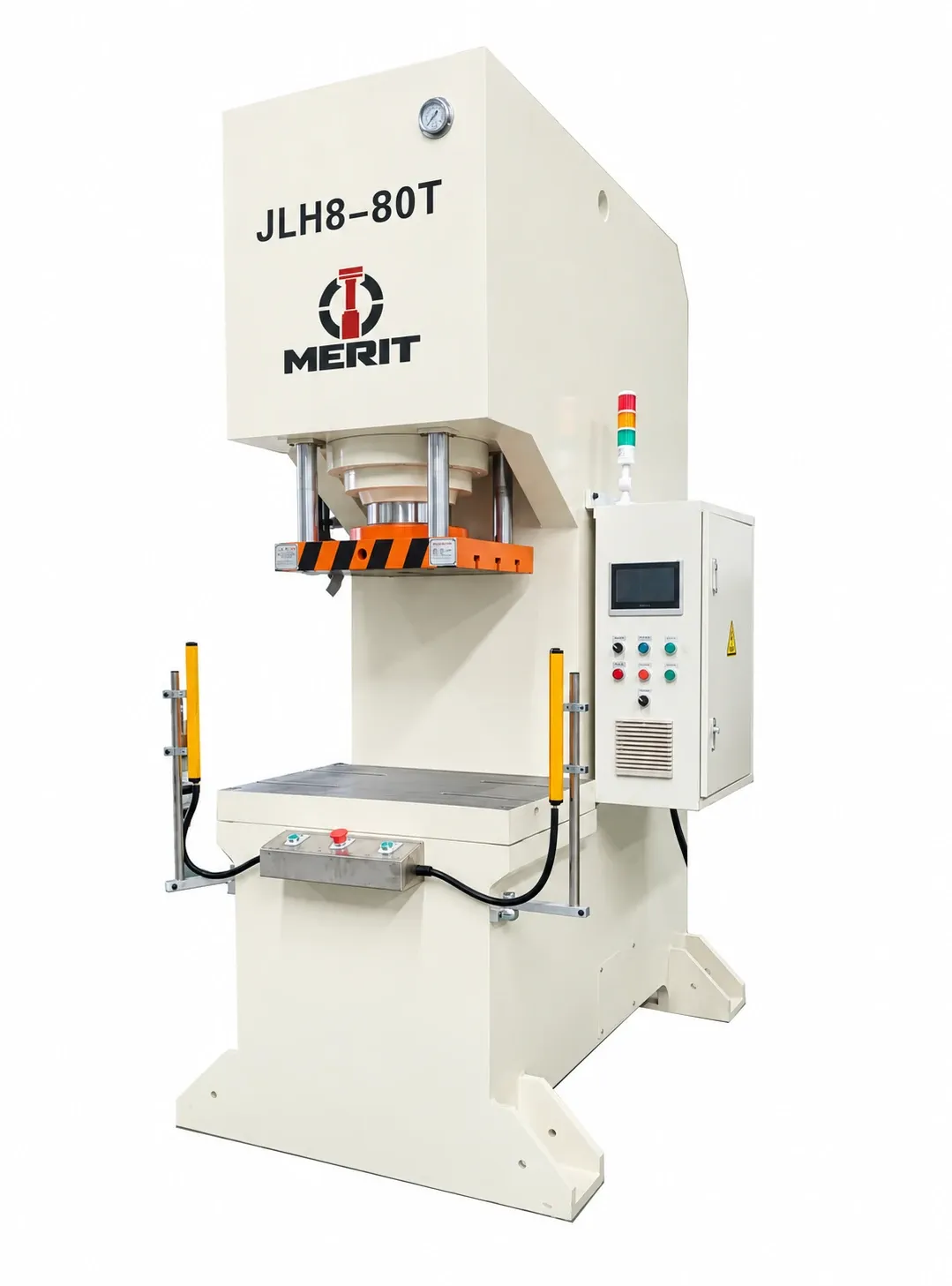
The company brochure describes the C-frame press as providing open access for pressing, shallow drawing, straightening and assembly. It describes the four-column double-action drawing press as combining a main drawing cylinder with a blank-holder cylinder. These descriptions give you different questions to investigate, rather than a universal ranking of the frames.
A broad comparison can hide different requirements
If your comparison sheet contains only a frame type and a force entry, it leaves the application discussion unfinished. Access, tooling height and the requested forming arrangement can remain unanswered even when both proposals have a model name. Treat an unanswered field as a question for clarification, not as an assumed match.
For example, a hypothetical purchasing team evaluating an assembly task would explain that task and its tooling requirements. A team evaluating drawing would describe the material and die information. These are purchasing situations, not reports of customer projects or evidence that either series is suitable for a particular part.
Use the brochure descriptions to frame the questions
For the C-frame range, the company brochure lists embossing, forming and shallow drawing of metal or non-metal parts. It also lists shaft and profile straightening, bushing press-fitting, riveting and electronics forming. Use those application descriptions to explain what you are investigating; they do not replace review of your own workpiece and tooling.
For the four-column double-action drawing range, the company brochure lists kitchen sinks, tableware and pot liners, along with motor housings, electrical enclosures, inverter cases and automotive drawn parts. Its separate main-cylinder, blank-holder and ejector parameters are a reason to compare the proposed process arrangement in detail.
Compare access, tooling and separate model fields
For access, describe how the workpiece and tooling need to approach the working area. The C-frame brochure identifies open working access with a long stroke and opening space. Ask how the proposed configuration addresses your access requirements, while keeping any unconfirmed handling arrangement outside the agreed specification.
For tooling, preserve the table labels. The company brochure specifies separate upper and lower worktable dimensions for the C-frame models. Its double-action drawing model entries use worktable L–R and F–B fields. Copy the fields belonging to the selected model; do not transfer a dimension from another model or assume the same table description applies to both ranges.
For the process discussion, the C-frame brochure requests the pressing task, workpiece dimensions and tooling height. The drawing-press brochure requests material, thickness, part drawing and die dimensions. Assemble the relevant authorized information before asking which configuration should remain on your shortlist.
Questions that narrow the shortlist
Does the frame type prove precision or rigidity?
The approved brochure information does not provide a comparative precision or rigidity result for these ranges. Keep those requirements explicit and ask for configuration-specific clarification. Do not substitute a broad statement about frame shape for evidence addressing your purchasing requirement.
Can an application list decide the purchase?
It is a starting point for discussion. Both brochures say reference parameters vary by model and require confirmation of the selected configuration and final specifications in the order contract. The cover is an approved AI C-frame series illustration, not an exact model confirmation.
Make the comparison specific to your process
Share your authorized application and tooling information with Merit to discuss access, model fields and the press arrangement for your purchasing review.